Robotics · Software
When AI Mistakes a Flower Pot for a Cat
From YOLOv4 Tiny to YOLOv8 and Custom AI Training
By Sebastian Rychlik · Published
- TerraScanAI
- Computer Vision
- YOLOv4 Tiny
- YOLOv8
- OAK-D Pro
- Object Detection
- Vertex AI
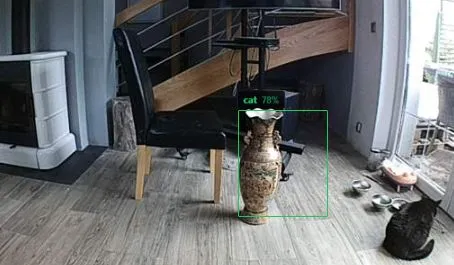
One of the first AI models running on my robotics platform confidently identified a flower pot as a cat.
The actual cat, sitting right next to it, was completely ignored.
Not a low-confidence prediction – 78%. Not a borderline case. A confident one.
Welcome to the reality of computer vision outside carefully curated demo videos.
The Unexpected Detection
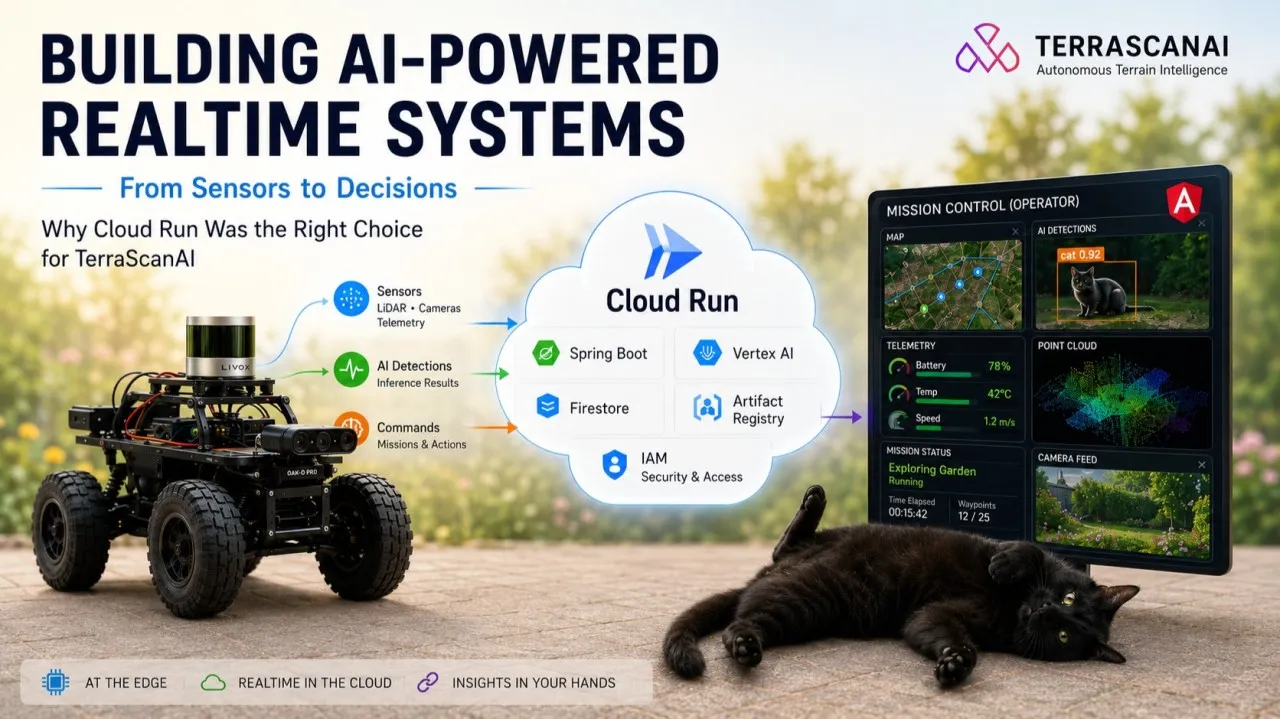
As part of TerraScanAI, I’m currently building an AI-powered robotics platform combining NVIDIA Jetson, OAK-D Pro, LiDAR, Angular, Spring Boot and Google Cloud technologies.
One of the platform’s goals sounds deceptively simple:
Detect and recognize cats.
The screenshot below comes from the factory YOLOv4 Tiny COCO model running on my OAK-D Pro camera.
When a Flower Pot Becomes a Cat
The result?
The flower pot became a cat! The cat remained a cat-shaped mystery.
Why a Different Model Wasn’t the Whole Answer
Fortunately, TerraScanAI is more than just a camera pipeline. Using my own Angular and Spring Boot platform, I’ve been collecting images, reviewing detections, managing datasets and continuously improving the AI workflow.
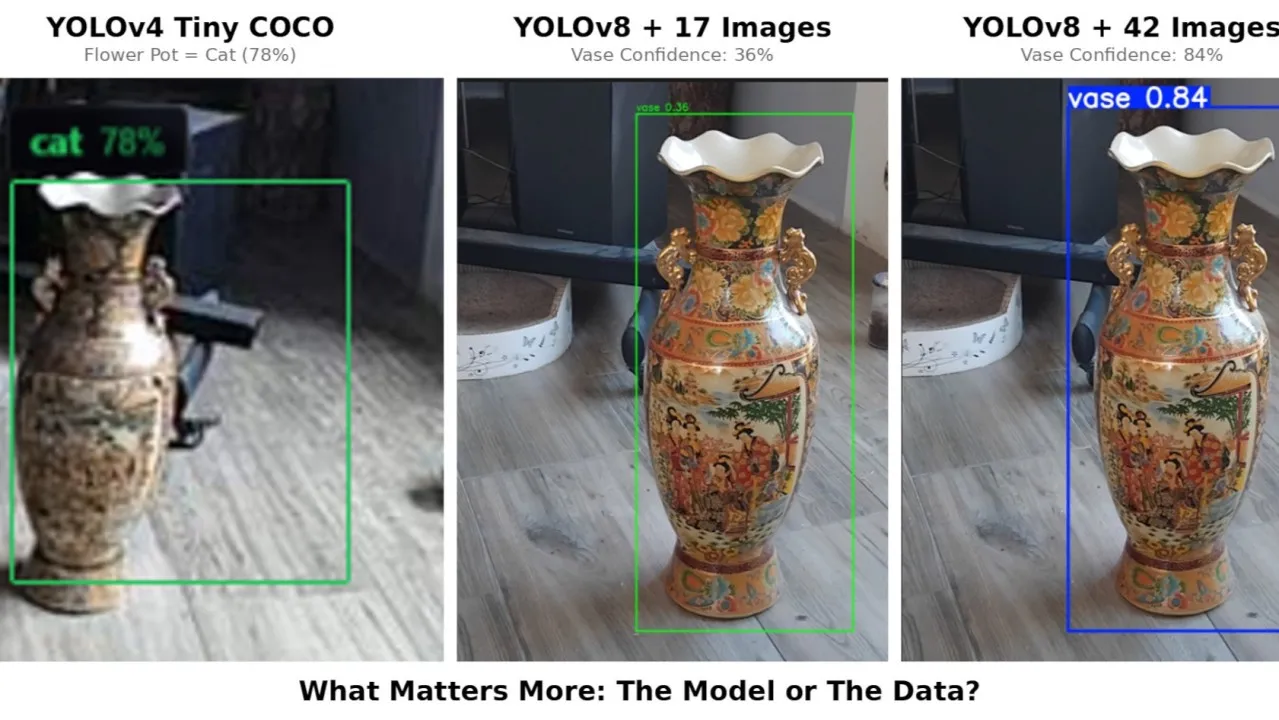
One of the first upgrades was replacing the factory model with YOLOv8. The improvement was immediately visible.
However, the story doesn’t end there.
Although YOLOv8 performs significantly better, it’s still a model trained on somebody else’s data, not mine. And that’s where the next challenge begins.
Building a Custom Training Workflow
Over the last few weeks I’ve been building and testing the next stage of the TerraScanAI pipeline:
- image collection
- dataset management
- annotation workflows
- dataset versioning
- AI training pipelines
- deployment to edge devices
The model is now heading towards training on a custom TerraScanAI dataset using Google Vertex AI. Next week I’ll share the results and we’ll find out whether better data can improve detection quality more than simply switching models.
Lessons Learned
Unfortunately, the flower pot has already joined the Cat Workers’ Union.
Read the follow-up: What Matters More — The Model or The Data?